QuPIDC News

MRI technology inspires quantum advancement with 2D materials
The same technology behind MRI images of injury or disease also powers nuclear magnetic resonance (NMR) spectroscopy, which is used to analyze biological molecules for research on diseases and therapeutics. While NMR spectroscopy produces valuable data about the structure of molecules, the resolution is too low to sense individual atoms. Now, quantum researchers at Purdue University are advancing an approach that could improve the resolution of NMR spectroscopy to the atomic scale and may also have applications in developing quantum computing and quantum communications.

Quantum leap in 2D semiconductors: Purdue team unlocks room-temperature spin qubits in GeS₂
For decades, researchers have searched for materials that can host stable qubits, the building blocks of quantum computers, at room temperature. A team at Purdue University has now demonstrated just that in a two-dimensional semiconductor, opening a new frontier for quantum sensing and computing. In a study recently accepted by Nano Letters, researchers found that the layered material germanium disulfide (GeS₂) can host controllable spin defects, or tiny imperfections that trap electrons with magnetic properties, that remain stable at ambient conditions.

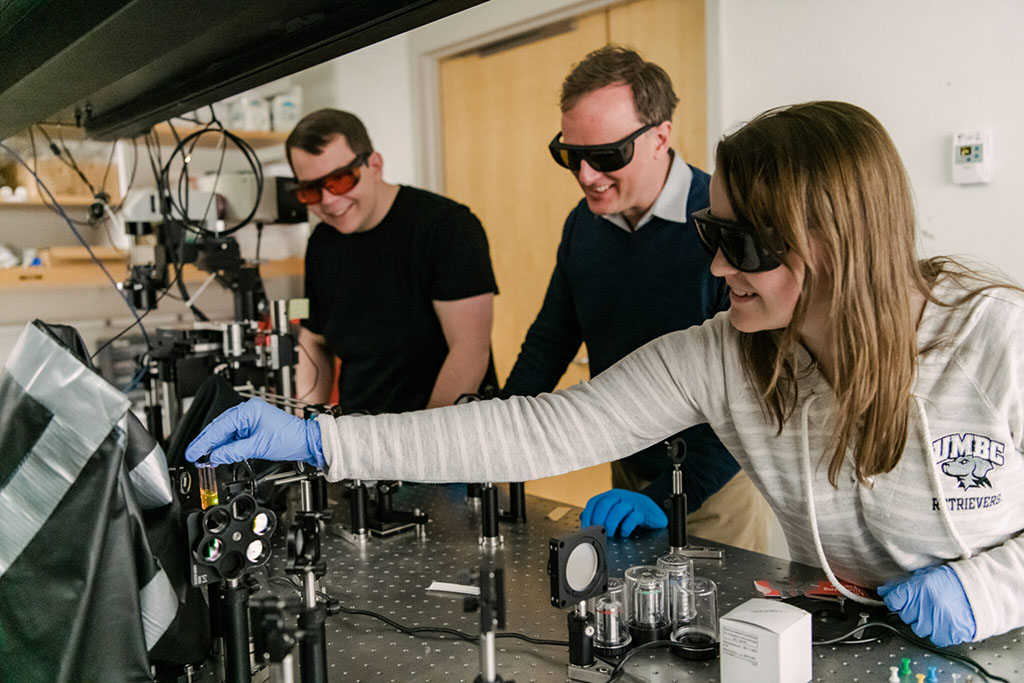
Quantum photonics expertise earns UMBC spot in DOE Frontiers in Energy Research Center
UMBC has been selected to participate in the Quantum Photonics Integrated Design Center (QuPIDC), which is led by Purdue University and also includes Los Alamos National Laboratory, Stanford University, Northwestern University, the University of Chicago, the University of Oklahoma, and Virginia Tech.
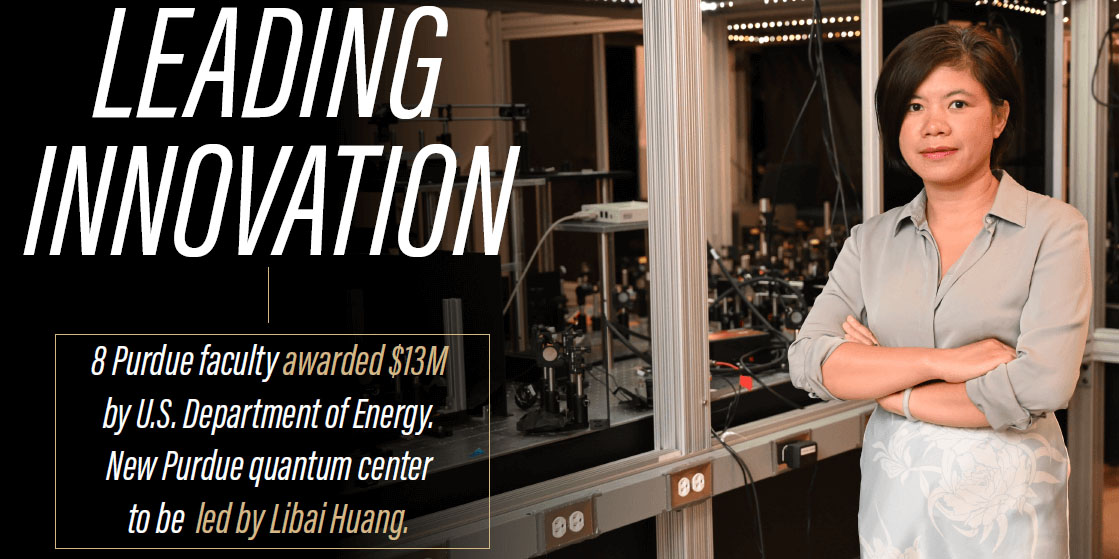
Purdue quantum photonics center established with $13.9 million DOE funding
Purdue University has been selected by the U.S. Department of Energy (DOE) to lead the Quantum Photonics Integrated Design Center (QuPIDC) Energy Frontier Research Center (EFRC).
Department of Energy Announces $118 Million for Energy Frontier Research Centers
Ten Energy Frontier Research Centers (EFRCs) designed to bring together world-class teams of scientists for groundbreaking fundamental research have been funded in nine states by the U.S. Department of Energy (DOE).